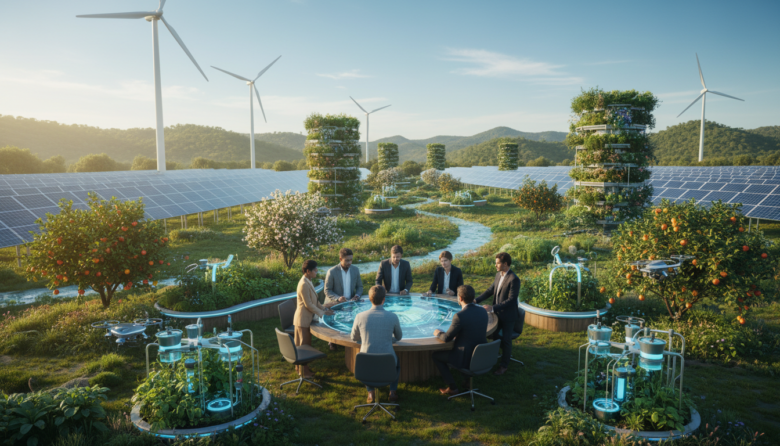
Sustainability has guided how we manage resources for many years. It started with early conservation and grew with the environmental movements of the 1970s. This thinking now shapes our modern work culture.
Today, a key goal is working smarter while minimizing our ecological footprint. According to the World Economic Forum, responsible digital technology use could cut global carbon emissions by 15% by 2030. This highlights the significant role our daily choices play.
This approach means our methods are not just about finishing tasks quickly. They are about creating workflows that protect resources and support well-being. Streamlined processes reduce unnecessary effort and material use.
Choosing how we organize our daily tasks is a strategic decision. It benefits both our personal output and the health of our planet. This is the foundation of a new way of thinking about getting things done.
Overview of Alternative Productivity Tools and Their Eco Credentials
The landscape of work management is evolving with environmentally conscious alternatives. Studies reveal that consumers and employees increasingly favor companies with strong green credentials. This shift puts pressure on digital platforms to demonstrate eco-conscious design.
Current Trends in Sustainable Productivity Solutions
The world is moving toward applications that balance efficiency with ecological responsibility. One clear example is the rise of energy-efficient software architectures. These systems minimize data transmission requirements while maintaining performance.
According to the World Economic Forum, responsible digital technology could reduce global carbon emissions by 15% by 2030. This data point highlights the significant impact of our technological choices. Sustainable solutions represent both ethical and competitive advantages.
Key Benefits of Non-Mainstream Approaches
This innovative approach offers multiple advantages beyond environmental sustainability. Users gain enhanced privacy protection and freedom from vendor lock-in. Transparent operations and data ownership become standard features.
These alternatives contribute to broader sustainability goals in modern workplaces. They demonstrate that ecological responsibility can coexist with effective work management. The benefits extend from individual users to organizational levels.
Evolution of Productivity Tools in the Age of Sustainability
A quiet revolution has reshaped the fundamental instruments we use to structure our professional and personal lives. This change moves us from paper-based systems toward digital solutions that prioritize efficiency and ecological care.
Transitioning from Traditional to Digital Workflows
For generations, physical diaries, calendars, and to-do lists were essential for managing work. Paper manufacturing, however, is a major source of global CO2 emissions. The deforestation linked to paper production also has severe, lasting effects on our planet.
Digital planners and calendars now offer a powerful alternative. They allow users to schedule meetings, set reminders, and track deadlines in real-time. Applications like Time Stream simplify planning by storing everything in one accessible place.
Some research suggests that reading on paper can improve comprehension for certain tasks. This indicates a hybrid approach will likely continue. Many people still prefer physical documents for brainstorming or deep reading.
The design of modern systems reflects a conscious effort to conserve natural resources. This movement toward digital options represents a strategic choice. It benefits our workflows and supports the conservation of vital environmental assets.
Benefits of Stepping Outside Mainstream Ecosystems for Work Efficiency
Modern efficiency is increasingly defined by how well a system balances output with its environmental impact. This approach creates tangible advantages for both organizational performance and planetary health.
Moving towards these methods is a strategic decision. It aligns daily operations with broader goals for resource conservation.
Enhanced Environmental Impact and Conservation Focus
Platforms built with sustainability at their core make a direct positive impact. They often operate on energy-efficient architectures that lower carbon emissions.
This focus extends to a deeper commitment to conservation. It reduces the digital carbon footprint of every task completed.
Boosting Productivity Through Greener Practices
Greener practices naturally lead to smarter work. They eliminate wasted effort and streamline complex processes.
Key benefits include:
- Reduced resource consumption across projects
- More focused and intentional task management
- Stronger alignment with modern consumer and employee values
This demonstrates that ecological responsibility is a powerful driver of improved performance. It offers a clear competitive edge in today’s market.
Case Studies of Innovative and Eco-Friendly Productivity Tools
Concrete implementations demonstrate the successful merger of ecological responsibility and digital efficiency. These real-world examples show how thoughtful design choices create meaningful environmental benefits.
Spotlight on Tools Like Time Stream
Time Stream offers a compelling case study in sustainable design. The application stores data locally on user devices rather than constantly syncing to cloud servers.
This local-first approach significantly reduces energy consumption. Users report a smooth and private experience while minimizing their digital carbon footprint.
Other Noteworthy Alternatives and User Experiences
Several other platforms prioritize sustainability through energy-efficient architectures. These solutions focus on reducing resource consumption while maintaining full functionality.
User feedback highlights improved data control and reduced environmental impact. The positive experience confirms that ecological responsibility enhances rather than compromises effectiveness.
These case studies prove that innovative design can simultaneously protect privacy and conserve resources. They represent practical alternatives for environmentally conscious professionals.
Environmental Impact and Sustainability in Modern Productivity
The invisible energy consumption of our daily digital operations reveals a critical sustainability challenge. Many people don’t realize that cloud storage depends on massive data centers worldwide.
These facilities consume approximately 200 terawatt-hours of electricity annually. This represents about 1% of global electricity demand.
Every digital action contributes to this energy footprint. File uploads, task updates, and note synchronization all require power at data centers.
Most concerning is that this energy often comes from fossil fuels. This reliance contributes directly to greenhouse gas emissions and climate change.
Understanding the Energy Footprint of Digital Tools
Major technology companies recognize this environmental impact. Google, Microsoft, and Amazon have made significant commitments to renewable energy resources.
Google achieved carbon-neutral status in 2007. The company aims to operate entirely on carbon-free energy by 2030.
Key statistics highlight the scale of this challenge:
- Data centers use 1% of the world’s electricity
- Cloud operations depend heavily on finite resources
- Renewable energy commitments represent positive change
Understanding this energy footprint helps make informed decisions. Balancing functionality with environmental sustainability becomes possible when we know the true cost.
Integrating Biodiversity Considerations into Daily Work Practices
The challenge of biodiversity loss extends far beyond designated conservation zones. While establishing protected areas remains fundamental to biodiversity conservation, these spaces alone cannot halt global species decline.
Most of Earth’s biological diversity exists outside formal protected areas well. This reality makes integrated approaches essential for achieving meaningful biodiversity conservation goals.
Lessons from Biodiversity Mainstreaming in the Conservation Sector
The Global Environment Facility serves as the primary financial mechanism for the Convention on Biological Diversity. Between 2004 and 2014, this global environment facility supported 327 biodiversity mainstreaming projects with $1.6 billion in funding.
Mainstreaming biodiversity involves embedding conservation considerations into policies and practices of actors impacting biological diversity. This approach recognizes that effective conservation requires integration across all sectors.
South Africa’s Working for Water program offers a documented case study in biodiversity mainstreaming. The initiative focuses on controlling invasive plants in sensitive catchments to protect ecosystem services.
Another South Africa program uses bioregional planning to retain biodiversity in production landscapes. These examples demonstrate how mainstreaming biodiversity creates conservation benefits beyond traditional protected areas.
The lessons from these conservation sector initiatives show how environmental considerations can be embedded into daily practices. This approach moves beyond isolated efforts toward integrated solutions for biodiversity conservation.
Strategic Design and Energy Efficiency for Greener Workflows
The next frontier in digital efficiency involves rethinking how applications consume energy at their most basic level. This approach represents a fundamental shift in development strategy.
Optimizing Software for Low Resource Consumption
Developers now prioritize energy efficiency as a core design principle. They optimize code to reduce processing power requirements at the software level.
Key techniques include minimizing background data synchronization and eliminating unnecessary features. These considerations significantly lower energy consumption while maintaining functionality.
Reducing Dependence on High-Energy Cloud Systems
Another critical strategy involves decreasing reliance on energy-intensive cloud infrastructure. Local data processing reduces the environmental impact of digital operations.
Thoughtful architecture choices balance performance with sustainability. This management approach creates workflows that conserve resources effectively.
Both developers and users play essential roles in adopting these energy-conscious solutions. Their choices drive meaningful progress toward greener digital practices.
Uncovering productivity tools outside mainstream ecosystems
Beyond the familiar giants of the digital world lies a vibrant landscape of specialized applications. These alternatives are often designed with distinct priorities, such as enhanced data privacy or reduced environmental impact.
Exploring these options opens up new possibilities for customization and independence. You can find solutions that align closely with your personal or organizational values.
The process of discovering and adopting these applications involves a learning curve. However, the adaptation period often leads to a more tailored and efficient workflow. The user experience is frequently praised for its focus and lack of bloat.
Effective task tracking and project management can be achieved at any level using these non-integrated solutions. They offer robust features without tying you into a single vendor’s environment.
When evaluating alternatives, consider criteria like energy efficiency, data ownership, and core functionality. This practical guidance helps you select applications that support both your work and your principles.
Aligning Remote Work with Eco-Friendly Practices
The convergence of remote capabilities and sustainability goals represents a milestone in workplace evolution. This alignment creates benefits across environmental, social, and economic dimensions.
How Remote Work Reduces Carbon Footprints
Transportation accounts for approximately 29% of total U.S. emissions. Daily commutes from passenger vehicles contribute significantly to this environmental impact.
Research studies from Global Workplace Analytics reveal compelling data. If half the U.S. workforce worked remotely half the time, annual emissions could drop by 54 million tons.
This reduction equals removing 10 million cars from roads. The positive impact on air quality and climate health becomes immediately apparent.
Achieving Better Work-Life Balance Through Digital Solutions
Flexible schedules help employees find harmony between professional and personal life. Digital solutions enable this balance while maintaining team security and connection.
Happier, less stressed workers tend to perform better toward organizational goals. This improved health directly supports collective work output and individual well-being.
Communication platforms and project management systems keep teams coordinated. They ensure effective remote work while supporting broader sustainability objectives.
Final Reflections on a Sustainable Productivity Future
Global conservation initiatives offer valuable lessons for reshaping how we approach our daily professional activities. The nearly $7 billion invested by the Global Environment Facility in biodiversity mainstreaming demonstrates the scale of commitment needed for meaningful change.
Case studies from South Africa’s Working for Water program show how conservation can transform policies across sectors. This approach created thousands of jobs while protecting vital ecosystem services in protected areas.
Similarly, Costa Rica’s success with ecotourism and forest incentives proves that economic development and environmental protection can align. These examples provide a blueprint for integrating sustainability into our work strategies.
The future requires us to apply these conservation principles to our daily practices. By embracing this integrated management approach, we can achieve both personal effectiveness and contribute to broader sustainable development goals.