Our world moves at a dizzying pace, especially in the realm of tech. New gadgets and digital innovations appear constantly, promising to revolutionize our daily lives.
Yet, amidst this rush toward the future, a fascinating trend persists. Many people continue to rely on classic devices from a bygone era. These tools offer practical answers to contemporary challenges.
Why do these older inventions hold their ground? The reasons are often simple. Some offer unmatched reliability, built to last for decades. Others provide a straightforward user experience free from complex software updates.
This exploration celebrates timeless design and engineering. We will journey through various categories of these enduring innovations. You will discover how they effectively serve modern users.
Innovation does not always mean abandoning what worked perfectly in the past. Let’s uncover the nostalgic and functional value of these remarkable pieces of tech.
A Journey Through Obsolete Innovations
Digital evolution has left behind a fascinating trail of once-essential gadgets. These inventions defined entire eras and shaped how people interacted with the world.
Exploring relics of technology gone by
Many devices that were revolutionary in their time now seem almost primitive. Pagers, floppy disks, and portable DVD players were cutting-edge solutions. They addressed specific needs during particular periods in history.
These tools transformed daily life and created new cultural norms. People adapted their behaviors around these technological marvels. The gadgets became embedded in social routines and work processes.
Understanding this history helps us appreciate modern advancements. Each obsolete device contributed to the foundation of current innovations. The creative problem-solving approaches from past decades continue to influence contemporary design thinking.
Retro technology still useful today: Revisiting Classic Devices
The appeal of vintage equipment lies not just in nostalgia but in genuine functional advantages. Many people continue to rely on these older tools for specific tasks. They offer unique benefits that modern alternatives sometimes overlook.
Why these vintage devices remain relevant
Reliability stands as a key factor. Older equipment was often built with durable materials and simple mechanics. This construction allows them to function for decades without frequent repairs.
Simplicity also contributes to their lasting appeal. Many users prefer straightforward operation over complex digital interfaces. The tactile experience of physical controls provides satisfaction that touchscreens cannot replicate.
Consider the preference for physical books over e-readers. While digital books offer convenience, many readers enjoy the sensory experience of paper pages. Library books provide free access while maintaining that tangible connection.
Certain classic tools serve niche purposes exceptionally well. Newer innovations have not always improved upon their core functions. This demonstrates how technology still delivers value even when considered outdated.
The decision to use today’s modern gadgets or older devices often comes down to personal preference. Some tasks are simply better handled by classic tools. Their continued presence in our lives reflects genuine utility rather than mere sentiment.
Office Essentials Transformed Over Time
The modern office environment has undergone remarkable transformations in communication tools. These changes reflect broader shifts in workplace culture and efficiency standards.
From Clack to Click: The Evolution of Typing
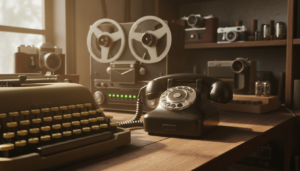
Typewriters once dominated professional settings with their distinctive mechanical sounds. The rhythmic clacking and satisfying dings marked productive work sessions.
Their robust design ensured longevity in busy office environments. Each keystroke produced immediate, permanent results on paper.
Computer keyboards eventually replaced these mechanical workhorses. The transition brought quieter operation and digital editing capabilities.
Fax Machines: Out with the Old, in with the New
The fax machine became essential for rapid document transmission. Every company relied on this technology for urgent communications.
Despite their usefulness, fax machines presented constant challenges. Toner mishaps and paper jams created daily office drama.
The distinctive dial-up screech signaled incoming transmissions. This noisy process became synonymous with business operations.
Email and cloud storage eventually phased out the traditional fax machine. Some industries maintained fax capabilities for secure document handling.
Entertainment Devices That Captured Our Hearts
Before streaming services dominated our leisure time, physical media and dedicated gaming systems defined entertainment. These devices created shared experiences that brought people together.
Movie Nights with VHS and Laser Discs
VHS tapes transformed home viewing with their clunky cassettes. The ritual of rewinding became part of the movie experience. Tracking issues sometimes frustrated viewers but added character.
Laser discs promised superior video quality with their gigantic shiny format. They suffered from skipping problems and never gained mainstream popularity. Their oversized nature made handling difficult.
Arcade Machines and Handheld Gaming Legends
Arcade machines created social hubs where people spent countless hours. Players inserted quarters hoping to beat high scores. The flashing lights and immersive sounds made these machines irresistible.
Nintendo’s Gameboy achieved worldwide popularity in 1989. This handheld system revolutionized portable gaming. Titles like Tetris made games accessible anywhere, changing the gaming world forever.
The music and sound design in these systems contributed to their lasting appeal. They captured a specific moment in time that continues to resonate.
Communication Tools: From Phone Booths to Smartphones
Few aspects of daily life have changed as radically as our methods of staying in touch with others. The evolution from shared public spaces to personal devices transformed how we connect.
This shift represents one of the most significant technological transitions in modern history. It altered social patterns and accessibility.
Old-School Telephony and Its Lasting Impact
Phone booths once served as essential infrastructure in public places. People relied on them for urgent calls when away from home.
During the 1980s, pagers became popular communication tools. These devices vibrated to alert users when someone tried to reach them.
Fancier models featured screens displaying caller information. However, pagers had a major limitation – users couldn’t respond directly.
This forced people to find a phone booth to return calls. The dependency between these two technologies defined communication for a time.
Early mobile phones could only handle calls and texts. They represented the first step toward constant connectivity.
The way people communicate changed from planned calls at specific places to instant access anywhere. This transformation continues to influence social interaction patterns today.
Portable Gadgets: A Nostalgic Look at Mobility
Portable audio devices reshaped our relationship with music by making it a personal, mobile experience. This shift put entire music collections directly into people’s hands, changing how we interacted with sound.
The Rise and Fall of Pagers
Before smartphones, pagers were essential for on-the-go communication. These simple devices buzzed or vibrated to alert users of incoming messages.
Their popularity was immense, but they lacked the ability for direct response. This limitation paved the way for more advanced mobile tech.
MiniDisc Players, MP3s, and Walkmans
Sony’s Walkman was a revolutionary piece of equipment. It introduced the concept of private listening with cassette tapes.
The MiniDisc followed, offering 1GB of storage and up to 45 hours of audio. This device seemed like a major leap forward at the time.
However, its popularity crashed when MP3 players entered the market. The pocket-sized MP3 player shocked the music world with its digital convenience.
Each new gadget faced rapid obsolescence as better tech emerged. The iPod ultimately dominated, making earlier pieces of equipment nostalgic artifacts. These portable gadgets collectively laid the foundation for today’s streaming landscape.
Mapping the Past: Navigation Before GPS
Traveling to unfamiliar places once required careful preparation and physical tools. Every vehicle’s glove compartment held an essential navigation aid that drivers relied on for journeys.
The experience of using paper maps created unique social dynamics inside the car. Passengers took on the crucial role of navigator, trying to interpret folded maps while providing directions.
Paper Maps and Roadside Adventures
This method of travel often led to tense moments and miscommunications. Drivers would frantically navigate while passengers struggled with map orientation.
Common challenges with paper navigation included:
- Misinterpreted road symbols and scale
- Difficulty refolding maps correctly
- Arguments over missed turns and wrong directions
- Limited visibility during night driving
The introduction of GPS changed the way people travel fundamentally. Digital guidance eliminated the need for human map readers and reduced navigation stress.
Paper maps moved to the backs of glove boxes as smartphone apps took over. When directions now go wrong, frustration shifts from people to technology.
Some travelers still keep paper maps as backups. They appreciate the broader geographic perspective that physical maps provide during long trips.
Data Storage Through the Ages
The way we store information has transformed dramatically across computing generations. Early methods seem almost primitive compared to today’s massive capacity solutions.
This evolution reflects both technical innovation and changing user needs. Each advancement built upon previous storage systems.
From Floppy Discs to Modern Memory Solutions
Floppy discs represented the first portable storage for personal computers. Their limited capacity could hold just a few documents or a single small game.
These magnetic pieces were revolutionary despite their constraints. Users carefully managed their limited space on each device.
Modern solutions like USB drives offer millions of times more capacity. Memory cards enable portable storage for cameras and phones. Terabyte hard drives store entire digital libraries.
The progression included zip drives, CDs, and DVDs along the way. Each new system addressed previous limitations while introducing new capabilities.
People maintain nostalgic connections to those early storage methods. They represent a significant lot of progress in computer development.
Innovative Classroom and Business Tools
Educational spaces and corporate offices once relied on specialized tools that seem almost primitive today. These devices handled specific tasks before multifunctional systems took over. They represented the peak of innovation during their respective eras.
Overhead Projectors and Calculators in Education
The overhead projector served as a classroom staple for fifty years. Teachers used it to display documents to entire classes. This simple design had an inherent flaw.
Students could discreetly blow worksheets off the stand during presentations. The company 3M manufactured these projectors for decades before discontinuing them in 2015. Interactive whiteboards eventually replaced this classic tool.
Standalone calculators faced a similar fate. Math teachers once warned students they wouldn’t always have a calculator available. Smartphones made that prediction completely wrong.
People now use calculator functions on their phones and computers. This integration made dedicated units largely unnecessary. Some professionals still prefer the tactile buttons for specialized work.
Simple games on these devices provided entertainment between calculations. The transition to multifunctional screens changed how we approach basic math.
PDAs and Early Digital Assistants
Personal Digital Assistants became essential business tools in the early 2000s. These handheld devices helped professionals track meetings and manage deadlines. Their capabilities seemed futuristic at the time.
PDAs could even send faxes, combining multiple functions in one portable system. They represented the first step toward digital organization on the go. This single-purpose design paved the way for smartphones.
The transition to multifunctional devices replaced calculators, PDAs, and numerous other tools. Today’s computers and phones combine all these functions into one screen-based system. This evolution demonstrates how specialized tools eventually merge into unified platforms.
Retro Tech Revisited: Celebrating Timeless Innovation
Each generation witnesses technological revolutions that reshape daily life in unexpected ways. The smartphone fundamentally changed everything, consolidating countless devices into one handheld system. Many people prefer using older equipment for specific tasks, valuing reliability over complexity.
This preference reflects deeper truths about innovation cycles. Better design doesn’t always guarantee market popularity. Some vintage machines remain functionally superior years after newer alternatives dominate.
Looking ahead, we wonder which current technology will become tomorrow’s nostalgic artifact. Will future generations view smartphone queues as quaintly as we remember fax machines? These questions remind us that progress involves both gains and losses.
The enduring legacy of older devices teaches us about human ingenuity and practical problem-solving. Understanding this history helps appreciate the rapid pace of change in our world today.