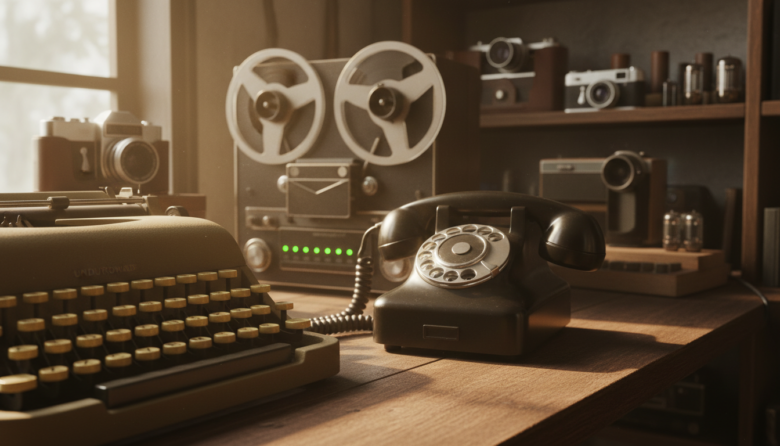
Many items from past decades were crafted with a different goal in mind. Manufacturers focused on creating goods that would stand the test of time. These products were designed for longevity, not frequent replacement.
Think about the sturdy appliances and communication devices from earlier eras. They often had simpler mechanisms that were easier to repair. This approach meant people could use the same device for many years.
Today, we see a shift towards products with shorter lifecycles. Modern gadgets offer incredible features but may not last as long. This article explores the valuable lessons from well-built items of the past.
We will look at how these older technologies achieved such remarkable reliability. Their design principles can inspire more sustainable choices for the future.
Rediscovering Timeless Innovations
Contemporary interest in vintage creations reveals a deeper appreciation for thoughtful design principles. People today are looking back at how things were made in another time. They see value in the careful approach that characterized earlier manufacturing.
The way products were developed prioritized lasting quality over quick turnover. Manufacturers invested in elaborate designs and sturdy construction methods. This created items that could be repaired rather than replaced.
Many older innovations demonstrate remarkable engineering wisdom. The transition to digital technology brought convenience but also complexity. Simpler mechanical systems often proved more reliable in daily use.
This rediscovery movement represents more than nostalgia. It’s a critical examination of what we’ve gained and lost. These timeless creations continue serving niche markets effectively today.
Wired Telephones: A Robust Communication Pioneer
Alexander Graham Bell’s 1876 invention revolutionized how humanity interacted across distances. This device became the primary way for people to have real-time conversations for over a century.
It established the foundation for modern personal communication networks.
Historical Evolution and Key Milestones
The earliest phones required operators to connect calls manually. The introduction of the rotary dial was a major step forward.
Users turned the dial for each digit, a simple yet effective mechanical feature. This innovation allowed for direct dialing and greater user independence.
These milestones paved the way for the telephone’s dominance throughout the 20th century.
Design Durability and Practical Advantages
These phones were built to last. Their sturdy construction meant they could withstand daily use for decades.
Users enjoyed clear call quality through dedicated copper lines. A significant practical advantage was the lack of a battery.
The device drew power directly from the phone line, ensuring it worked even during blackouts. This reliability made it a trusted household fixture.
Conversations on these phones were often more focused, free from the distractions common today.
Exploring Durable Pre-Internet Technology in Communication Devices
Two distinct innovations, the telegram and the ‘dumb phone,’ highlight an era of dependable communication. These tools prioritized function over flashy features.
They provided reliable ways for people to connect and share important news.
Sending a telegram was a skilled process. People used Morse code to transmit detailed information across great distances. This method required training and precision.
The delivery of a telegram was an event. Messengers brought physical slips of paper to homes. Their arrival added weight to the message inside.
This service created a sense of importance around every piece of information.
Early cellular phones, often called ‘dumb phones,’ focused on core tasks. They handled calls and texts with amazing efficiency. Their batteries could last for many days on a single charge.
These devices were tough. They could survive accidental drops that would shatter modern gadgets. Users appreciated this straightforward reliability.
The simplicity of these communication tools was their greatest strength. They worked consistently without complex updates or connectivity problems.
Swamp Coolers and Analog Cooling Solutions
Before complex air conditioning systems dominated the market, a simpler cooling solution thrived in many American homes. Swamp coolers, also called evaporative coolers, offered effective climate control using basic physics principles.
These devices provided cooling services through water evaporation rather than mechanical refrigeration. They were particularly effective in dry climates where traditional AC systems struggled.
Mechanics of Evaporative Cooling
The cooling process relies on water’s natural phase transition. Liquid water absorbs heat energy as it evaporates into vapor. This simple principle reduces air temperature without complex components.
Unlike modern systems requiring refrigerants and compressors, swamp coolers use fans and water pumps. The design minimizes moving parts that could fail over time. Homeowners could often perform maintenance themselves.
Energy Efficiency Lessons from the Past
Swamp coolers consumed significantly less electricity than vapor-compression systems. People in arid regions enjoyed comfortable indoor temperatures at a fraction of the cost. This approach made cooling affordable before cheap power became widespread.
The efficiency lessons remain relevant today. Matching technology to environmental conditions can reduce energy use. Simple, purpose-built solutions often outperform complex alternatives in specific applications.
Beepers and Pagers: The Original On-Call Devices
Before everyone carried a miniature computer in their pocket, a simpler device kept professionals connected. Pagers created the first wave of true mobile communication. They allowed doctors and emergency teams to be reached instantly.
Reliability in Critical Moments
These devices peaked in the 1990s with over 60 million in use. Their success was built on unwavering reliability. In hospitals, pagers offered a key advantage over early cell phones.
Their signals penetrate thick walls where smartphone service often fails. This ensures doctors get urgent messages no matter where they are inside a building. It is a matter of life and death.
Pagers also use a clever method called simulcasting. Instead of relying on one cell tower, signals come from multiple transmitters at once. This provides redundancy during network problems.
Battery life is another major benefit. A pager can run for weeks, while smartphones need daily charging. There is no need to worry about a dead battery during a crisis.
About 5 million pagers are still active today. This number shows that for critical tasks, simpler, focused tools often work best. Newer phones are not always the right answer.
Typewriters and Data Storage: The Backbone of Office Productivity
The clatter of typewriter keys defined offices for over a century. These machines transformed writing from a slow, handwritten process into a faster, more professional one. They became essential tools for creating everything from business letters to great novels.
This era also saw the rise of the first portable data storage. Floppy disks allowed people to save their work from early computers. Together, these tools powered productivity before the modern internet.
Simplicity Fuels Creativity
Typewriters offered a singular focus that is rare today. There were no pop-up notifications or web browsers to divert attention. The user’s entire world was the paper in the roller and the words being formed.
This forced concentration often led to deeper creative flow. Many modern writers still seek out typewriters for this reason. The satisfying physical act of typing creates a direct link between thought and page.
Each keystroke makes a permanent impression, encouraging more deliberate work. It is a different way of thinking compared to the easy edits of a word processor.
From Floppy Disks to Finger-Typing
Storing digital information was a hands-on task. The first floppy disks held a tiny amount of data by today’s standards. People needed a lot of them to save even simple projects.
Software installation was an event. Popular programs came on many disks, requiring careful swapping. This process taught users to value and protect their digital work.
Handling this data required care, as disks were easily damaged. Interestingly, their lack of connectivity is now a security feature. Some organizations still use them to protect critical systems from remote attacks.
The shift to computers brought immense power. But it also introduced new distractions and vulnerabilities that these simpler systems avoided.
Vintage Audio and Video: From DAT to VHS
Analog media formats from the past century continue to captivate collectors and enthusiasts with their distinctive characteristics. These physical formats created a unique experience that digital files cannot replicate.
The Resurgence of Vinyl Records
Vinyl records have made an incredible comeback in recent years. Sales jumped from 900,000 units in 2005 to nearly 12 million by 2015.
This revival stems from several factors that make vinyl special. People appreciate the large album artwork and the ritual of handling physical music.
Many listeners claim vinyl records produce superior sound quality. The format creates a warm, rich sound that digital compression often misses.
The market for vinyl records today includes both classic albums and new releases. Contemporary artists continue pressing their music on this classic format.
Analog Video Memories and Their Charisma
VHS tapes became popular in the 1980s as the primary way to watch films at home. This magnetic tape format dominated home entertainment for two decades.
The VHS experience included unique characteristics that fans now celebrate. Slight tracking issues and the need to rewind added to its charm.
Many people still respect VHS as a great way to watch and record films. The format’s limitations contribute to its nostalgic appeal rather than detracting from it.
Analog video memories captured on VHS possess an authenticity that digital video sometimes lacks. This technology created a distinctive viewing experience that streaming cannot match.
Revisiting Fax Machines and Paper-Based Communication
In our digital world, a 19th-century invention still handles sensitive documents for major institutions. The fax machine, created in 1843, continues serving doctors, lawyers, and government agencies. These organizations value its unique security features.
Faxing offers advantages over email for confidential information. It creates direct communication between two machines using phone lines. Unlike email that passes through servers, faxes are harder to intercept remotely.
Someone would need physical access to a specific phone line to capture a fax transmission. This makes it preferred for medical records and legal documents. The system works without internet access, relying on basic phone infrastructure.
Japan demonstrates remarkable ongoing use of this technology. Businesses purchased 1.7 million fax machines in 2013 alone. Restaurants and companies use them for orders and transactions.
Paper-based methods like checks also remain popular for similar reasons. Half of U.S. companies prefer checks for payments. Seventy percent of renters use them for monthly rent.
People appreciate the physical record that paper provides. This tangible proof offers security that digital records sometimes lack. The persistence of these methods shows that newer isn’t always better for certain tasks.
Analog Entertainment: Games, Films, and Art in a Pre-Digital Era
Long before streaming services and online gaming, entertainment was a hands-on social experience. People gathered in living rooms for multiplayer video games and visited stores to purchase physical media. These activities created memorable moments that digital convenience often misses.
Shared Experiences Beyond Screens
Gaming meant friends crowding around a television with multiple controllers. The Nintendo 64’s four ports encouraged local competition in games like Super Smash Bros. PC gamers carried entire setups to connect computers for LAN parties.
Film consumption required planning and travel. People visited video stores or cinemas instead of clicking play from home. This effort made movie nights special events rather than casual viewing.
Music lovers browsed record stores for albums and singles. They listened to complete works rather than skipping tracks. This exposure to full albums created broader musical appreciation.
Newspaper reading became a daily ritual at breakfast or during commutes. The finite content of paper editions contrasted with today’s endless digital feeds. These analog activities fostered real-world connections that modern internet-based entertainment often lacks.
Reflections on Timeless Innovations for a Modern World
Simple engineering principles from earlier decades continue to inspire modern designers. These creations lasted for years because they focused on core functions. Today’s complex devices offer many features but often lack this lasting quality.
People used tools that served specific purposes extremely well. Modern smartphones provide incredible access to information and communication. Yet their short lifespan creates electronic waste that earlier innovations avoided.
The popularity of vinyl records and continued use of pagers show that newer isn’t always better. Companies can learn from this approach. Building products that last meets user needs and supports sustainability.
Looking forward, we can balance innovation with reliability. The best future technologies might combine modern capabilities with time-tested durability.