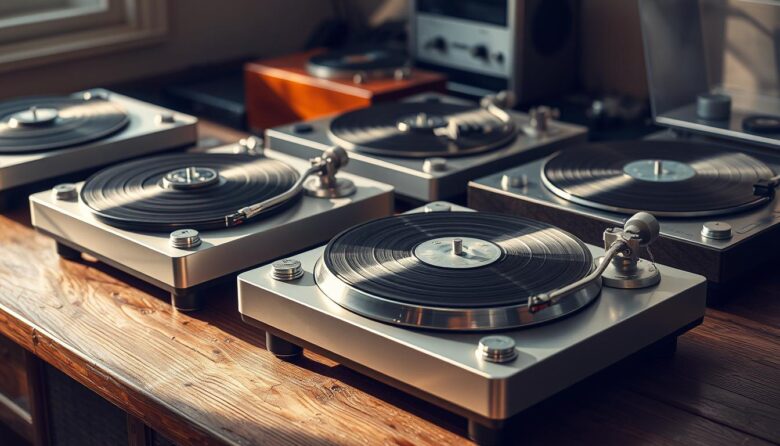
Falling for classic sound and craft is easy when a spinning platter can bring music to life. This buyer’s guide shows readers across the United States what a restoration journey looks like, from first inspection to a well-tuned deck.
We cover how to evaluate quality and spot real charm versus hype. You’ll learn which parts matter most—motor, bearing, platter, tonearm, and cartridge—and where common issues hide.
Find advice on choosing a candidate, questions to ask sellers, and a realistic timeline that respects your time and budget. The guide lists proven models with a history of long-term reliability so you know where DIY makes sense and when to get professional help.
Expect practical checklists, setup tips, and clear steps from your first test spin to enjoying the design and record sound that made these machines beloved.
Why Vintage turntables still matter for music lovers in the United States
Many listeners still choose older decks because they want a more tactile, music-first experience.
The appeal often comes down to sound and build quality. Solid plinths, heavy platters, and serviceable parts give a confident, present sound that can feel richer than mass-market gear.
True 1970s design examples like the Thorens TD‑125 earned praise for speed stability and serviceability. Those models stay in shops because parts, documentation, and community know-how survive the years.
When “vintage” is marketing, not merit
Not every product labeled vintage meets real quality standards. Look for quiet motors, good bearings, and documented performance rather than a retro finish.
Some classics use suspended layouts that isolate noise well when placed on a truly inert stand or wall-mounted shelf. But they can show footfall problems if set down on a flimsy rack.
Use a short checklist to separate timeless decks from those riding a retro look: serviceable design, upgradeable arms, accurate speed, and proven durability.
How to choose a project table before you buy
Picking the right project table starts with a short list of models you can actually service. Focus on candidates with parts, manuals, and active owner communities so you won’t stall when a part or trick is needed.
Set a realistic ceiling price that includes a bit of headroom for belts, lubricant, a basic cartridge, and small incidentals. That way the final cost won’t surprise you and the project stays fun.
Assessing models, price, and availability of parts
Ask sellers for close photos of the motor area, underside wiring, and drive assembly. Verify power needs and any service history before committing.
Pick tables known for modular parts — removable arms and swappable armboards make upgrades easier and save money over years.
Drive types explained: belt, idler, and direct drive
Decide on a drive the practical way. Belt drives are quiet and forgiving to restore. Idler drives can give bold dynamics but need more bearing work. Direct drives lock speed well but bring electronics into play on your bench.
Inspect candidates in person when you can. Check platter wobble, tonearm bearings, cueing, and whether the motor starts and holds speed. These quick checks save a lot of time and keep the path to good music straightforward.
Vintage turntables restoration checklist
Start each project with a short inspection routine to avoid surprises and keep work efficient. This checklist focuses on mechanics first, then tone and electronics so you can track improvements in sound and performance.
Motor, bearing, and platter: the mechanical heart
Power up and listen for bearing noise. Check the motor pulley for wear and confirm the bearing is lubricated with the correct oil.
Pull the platter and inspect the main bearing for scoring. Ensure the sub‑platter fits tight to keep quiet operation and consistent sound.
Tonearm inspection: bearings, wiring, and geometry
Check vertical and horizontal bearings for free, notch‑free motion. Verify anti‑skate and wiring continuity from headshell to output so channels stay balanced.
Cartridge strategy: start simple, then upgrade
Fit an affordable, well‑aligned cartridge to check basic performance. Only upgrade after the table is mechanically stable to avoid masking setup errors.
Speed stability and pitch control testing
Use a strobe disc or app to confirm speed and pitch. For models like the TD‑125, electronic speed control and trimming give excellent stability, but verify belt or drive health first.
- Replace belts, mat, and feet; clean contact surfaces.
- Document each step in a checklist so you can repeat fixes on other tables.
Parts, arms, and compatibility: what’s easy, what’s tricky
Swapping parts and arms often defines whether a restoration is smooth or stalls on the bench. Plan parts early: belts, mats, and feet are easy to source. Harder items, like factory dust covers or rare switches, take time and patience.
SME made a big change by restricting general sales, so finding new sme arms became tougher for many owners. That shift nudged hobbyists toward other, readily available choices.
Alternatives that fit well
Rega, Michell, and Origin Live arms suit many classic models when mounted correctly. Expect to use replacement armboards and perform geometry checks for effective length and pivot‑to‑spindle distance.
Practical setup checks
When mixing parts across tables, verify spindle height, bearing stack, and platter thickness so arm geometry stays correct. Consider how arm mass and cartridge compliance affect the drive and resonance.
If your existing tonearm still services well, a rebuild—rewire, clean cueing, and set bearing preload—can be the most cost‑effective upgrade. Keep a small cache of headshell screws, spacers, and counterweights to avoid slowdowns.
Iconic models to know: Thorens TD-125 and beyond
A few landmark decks define how hobbyists approach service, upgrades, and cartridge pairing.
Thorens TD‑125: suspended engineering and a heavy platter
The TD‑125 stands out for its suspended design and a seven‑pound platter. Its motor and electronic speed control give fine pitch adjustment. That stability makes setup and cartridge matching easier for DIY restorers.
More than 100,000 units sold in 1975 means parts and donor tables are still available. Many owners swapped the stock arm for SME options in past years, though today people also fit Rega, Michell, or Origin Live arms.
Cartridge pairings that work
Practical cartridge choices simplify upgrades. The Ortofon 2M Black performs well for everyday listening.
For fuller midrange and a classic sound, the Denon DL‑103 is a reliable fit. Low‑output moving coils like Dynavector LOMC also pair nicely with the TD‑125’s character.
Other models and why they matter
Research Roksan Xerxes and similar names to learn how design choices affect sound and maintenance. Compare suspended versus rigid plinths, motor layouts, and bearing designs when making your list of models to hunt.
Placement matters for suspended tables: a heavy rack or wall shelf reduces footfall. That small step often yields the biggest improvement in long‑term listening pleasure.
Where to buy and who can help restore
Knowing where to buy and who will stand behind the work saves time and money. Start by building a short list of reputable shops and sellers before committing to a purchase or shipment.
Trusted restoration services and why they matter
Choose services that publish transparent labor rates and show photographic documentation of work. Shops that include a test record spin and video of speed stability earn extra trust.
Specialists like Vinyl Nirvana have earned solid reputations over the years for clear communication and reliable TD‑125 setups. Experienced shops handle difficult tasks—electronic board calibration and bearing rebuilds—so you get consistent results.
Garage sales to reputable dealers: sourcing strategies
Hunt locally at garage and estate sales, check classifieds, and join enthusiast forums to find good deals on tables and other gear. Reputable dealers often offer return policies or short warranties that protect your purchase.
- Ask for a firm price that includes inspection notes.
- Confirm packing methods and ask for photos before shipping.
- Keep a clean LP and strobe disc handy to verify records and speed after service.
Set-up for performance: isolation, speed, and recording
Isolation, accurate speed, and careful cartridge setup are the fastest way to better sound at home. Treat these steps as a short, repeatable routine so each record sounds more consistent over time.
Suspended tables and footfall: heavy racks and wall shelves
Suspended designs need an inert stand or a dedicated wall‑mounted shelf to decouple the deck from footfalls. A heavy equipment rack works well when a shelf is not possible.
Stability preserves speed accuracy and keeps the music focused during everyday use in a living room or studio.
Dialing in VTA, azimuth, and tracking force for better sound
Calibrate speed with a strobe disc only after checking belt condition and bearing lubrication. Mechanical health is the surest path to steady performance.
Set tracking force with a scale, then tweak VTA and azimuth by ear and measurement. The stylus must sit square in the groove to unlock detail and channel balance.
Keep a simple setup list—level, speed, tracking force, anti‑skate, and cable routing—and revisit it after a few hours of break‑in. If you plan on recording, run into a clean phono stage and interface with proper gain staging to avoid clipping and keep dynamics intact.
Modern nostalgic record players vs true vintage gear
If you want instant playback with speakers and Bluetooth, modern nostalgic units deliver, but they trade off repairability and precision.
Today’s all-in-one options — Navigator 8‑in‑1, Quincy 6‑in‑1, Ashford 7‑in‑1, Liberty with Stand, and Mayfield Jukebox — bundle radio, Bluetooth, and built-in speakers in a single piece of furniture.
All-in-one options like wood console players and jukeboxes
These units are great for a dorm, office, or as a lifestyle piece. They look and sound fine for casual listening and a bit of background music.
Convenience, connectivity, and trade-offs in audio quality
All-in-ones limit upgrades. You rarely can swap a cartridge, service the motor, or tune precise speed like you can with modular tables and component gear.
If your priority is long-term audio performance and careful record care, choose a serviceable path. If you want instant setup and style, a modern nostalgic player will fit the bill and the price.
Your path forward: picking the right table, parts, and plan
A clear roadmap saves time and keeps projects fun. Start with a short list of vintage turntables that have parts support and documentation, then pick the one model that fits your skills and space so you can finish on time and enjoy the result.
Make a parts plan that covers motor service, a sensible cartridge, and any tonearm work you’ll tackle. Leave room to hand off the delicate thing you’d rather not risk. Decide on a drive that matches listening at home and favors reliability over specs you won’t use.
Use the same setup routine every time—level, speed, tracking force, anti‑skate, and quick listening checks. Over years this habit secures quality performance and smooth recording sessions. Study models like the Roksan Xerxes if you aim to upgrade, and give yourself realistic time goals so each session stays rewarding.