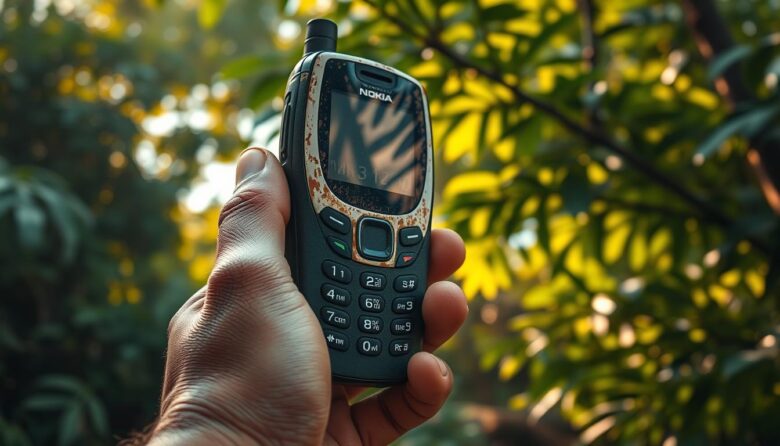
The tiny 84×48 monochrome display and rugged shell made a simple mobile phone into a durability legend. In places with scarce power and weak network signals, this model became a favorite for reliable voice and SMS service.
From the 3000 series launched in 2000 to later remakes like 3310 (2017), 3310 3G, and 3310 4G, the design stayed focused on core features. HMD Global revived the brand in 2016 and kept the product’s practical set for off-grid use.
By “endure” we mean steady network access, easy charging and battery swaps, and a spare-parts ecosystem that keeps a cell running for years. Basic GSM support and rugged hardware matter more than flashy extras in remote spots.
This guide previews battery care, network basics, rugged hardware, parts and resale, and model tips for U.S. readers. Expect concrete examples of boxed NOS finds, parts lots, and where to buy a dependable phone for harsh conditions.
Why the Nokia 3310 Became a Legend in Tough Places
Drops, spills, and long days away from a charger are where these models earned their names. A handset that survives a fall or a soak and still makes clear calls becomes a practical lifeline in remote work sites, farms, or cross-country trips.
Drop it, dunk it, dry it: real-world resilience
WIRED editors once recalled a 6160 that survived a pool dunk and kept working for years. That story shows resilience was lived, not just marketed.
These units avoided fragile slide and hinge mechanisms unless specifically built for rugged use. Fewer moving parts meant fewer failures on the job.
Snake and simple buttons in a world of touchscreens
The tactile button layout and compact shell beat glass that shatters or touch displays that glitch after a knock. A clicky keypad lets you text or place a call without fumbling a touch window in rain or dust.
And yes, the simple game Snake gave a little game-time relief when signal and power were scarce. The feature-first design focused on voice and SMS, so a single charge often lasted a full life-filled day of calls.
Old Nokia phones in the Present: What Keeps Them Alive Today
Many classic handsets still earn daily use because they simply power up, find a signal, and get the call done.
These devices thrive on basics: clear voice, reliable SMS, and a long battery window between charges. That feature-first design avoids background services and power-hungry apps, so standby stretches for days.
Spare parts and chargers are easy to find. Batteries, faceplates, and replacement keypads show up on resale sites and local shops, so simple maintenance keeps a unit working in minutes.
The used market and boxed new-old-stock listings mean entire series often reappear in good condition. A low total cost of ownership beats replacing cracked glass and costly repairs on fragile devices.
Basic GSM radios still hook up where legacy networks survive. For many users, a mobile that handles voice and SMS gives better access than an expensive smartphone with no service window.
HMD Global’s stewardship of the brand keeps the name visible and parts awareness high. Treat these handsets as practical tools: fast setup, cheap upkeep, and dependable cell service where it matters most.
Battery life that lasts for days, not hours
A single charge often meant several days of reliable use, not just hours of worry. Classic designs focused on the essentials, and that focus paid off in long battery life for real users.
From the 6160 to the 1100: multi-day charge culture
Low-power monochrome displays, efficient radios, and almost no background processes let a mobile stretch a charge. The WIRED anecdote about the 6160 shows how one charge could cover multiple days of calls without stress.
The 1100 earned a reputation for long standby and quick top-ups. Users learned to “top up once” and forget the charger for days, which is handy for fieldwork or travel with a small service window.
GSM voice uses far less power than constant data sessions. That means a simple cell focused on calls and texts preserves precious milliamp-hours in remote areas.
Batteries are often swappable in seconds, so carrying a spare is an easy habit. A powered-off mobile in your glove compartment still boots and places calls when you need it, which matters in emergencies.
Years of use rarely erased the utility of these units because replacement packs are cheap and available. For basic calls and messages, this mobile life still beats many modern alternatives.
GSM basics and broad network compatibility in remote regions
In many rural and remote areas, simple GSM radios still open a communication window when smartphones lose signal. A basic phone with the right bands can find network access where data lanes are thin. That simple fact keeps these handsets relevant for fieldwork and emergencies.
2G and 3G footprints: why simple GSM still matters
GSM is the legacy standard for voice and SMS. Many 1000/2000/3000/5000 series models used GSM or EDGE, and some later units added UMTS (3G). That means a classic cell can place a reliable call or send a text where newer phones struggle.
When LTE isn’t an option, reliable calls and texts still are
Even in areas with weak LTE, voice and SMS often ride older bands. Remakes like the 2720 Flip and 2660 Flip add LTE but keep voice-first design. Check regional band support and SIM compatibility before you buy to ensure real-world access.
In short, a low-power radio tuned for voice outperforms a data-hungry mobile when the only need is a steady call or SMS. This network-first thinking explains why these pocket tools still matter today.
Rugged hardware and classic buttons beat fragile glass
A rugged casing and real buttons give field users a clear edge over fragile touch displays. A tactile numeric keyboard works with gloves, dust, or rain, so you can answer fast without a fiddly swipe.
Small plastic screens and thick shells absorb drops that would shatter modern glass. Models like the 5140i show how manufacturers built a work-ready mobile for rough days on site.
Fewer moving parts mean fewer failures. Quick faceplate and keypad swaps fix wear in minutes and keep a phone looking and working right.
On a job or a trail, you want to place a call or fire off a text without staring at a cracked window. A pocketable cell that shrugs off knocks brings real peace of mind.
Most units open with basic tools so users can swap a battery or clean contacts. For travelers and workers who value reliability over sleekness, these classic designs still win in the field.
Affordable and available: the active resale and parts market
A busy resale market keeps classic handsets and spare parts easy to find at practical prices. You can buy a working mobile or a donor unit and have it shipped in a box with basic accessories.
eBay snapshots: bargains and mint finds
Listings range from an original 1100 unlocked for about $22–$29 to a 5110 appearing at $34–$51 as unlocked GSM units. Collector-grade items like a 5230 “new old stock” from France or a 5140i with original box show up around $140–$164.
Parts-only lots keep devices serviceable
Mixed lots — single units, lots of 11, or bulk faceplates (63x 5125/5165) — often sell for $28–$125. You can harvest a battery door, keypad, or mainboard and revive a daily cell for low cost.
Compare photos, IMEI details, and condition notes before buying. Sellers across the U.S., China, France, and Jordan keep supply fluid, and even “gold recycle” lots can be a treasure for repair-minded buyers.
Repairability and modularity: faceplates, batteries, and spares
A modular design means simple fixes, so a worn handset can be back in service in minutes.
Pop-off faceplates, snap-in keypads, and tool-less battery doors make upkeep fast and obvious. Swap a tired battery in seconds and keep working without a repair appointment.
Replacement parts — doors, antennas, numeric keyboard pads — are still a click away on resale sites and parts packs for a given series. Full spares bundles and parts-only units are cost-effective ways to refresh a mobile phone without special skills.
That simple modularity cuts e-waste and lowers total cost of ownership. Fewer paid fixes means more uptime for a field cell or a backup unit kept in the car glovebox.
A friendly services ecosystem — sellers, small shops, and online forums — helps with guidance and parts access. For many models the only tools you need are a fingernail and a small screwdriver, and keeping an extra keypad membrane or door on hand keeps the device looking and feeling new.
Text and calls first: feature phones that do the job
When all you need is a clear call and a quick text, a simple feature device gets the job done without fuss.
T9 texting, clear calls, and the beauty of no distractions
These small mobile phone designs focus on essentials: fast T9 input, strong audio, and long standby. A numeric keyboard lets you type by feel, so short messages go out in seconds without hunting menus.
The device boots almost instantly and sends your text over basic gsm even when data lanes are weak. That reliability creates a real service window for parents, crews, and travelers who must stay reachable.
Snake and a tiny game give a low-power break during idle time. Unlike touch-first devices, this mobile avoids constant notifications, updates, and battery drain.
In short, a feature phone handles the essentials—answer a call, send a text, and move on. Keep one in your kit as a dependable backup mobile phone or a no-frills cell for focused days in the field.
Iconic models still in demand
A handful of model names still carry a reputation for toughness and simple reliability.
Spotlight the durable core: the 3310, 3210, 1100, and nokia 5110 define what many picture when they think indestructible. Each phone keeps calls and texts as the priority, with easy swaps for battery and faceplate.
Music and media hits
The 5310 XpressMusic stands out for side media keys and long play time; modern reissues keep that product spirit alive. The 5230 brought budget touchscreen navigation and strong battery behavior for its class.
Tough-actives and outdoor picks
Models like the 5140i belong to the active series. They offer better grips, protective shells, and useful extras for weekend adventures or work sites.
Across the range you’ll find variations: some add a basic camera or a slide feature, while core classics skip extras to keep a long service window. Simple games like Snake add light entertainment without draining power. Match your use-case—music, toughness, or all-day calling—to the model you choose. These names still fetch attention on resale sites for boxed and good-condition finds.
Old Nokia phones: a list of reasons they still shine
For users who need a reliable window to voice and text, these models still shine. They earn trust through simple design and real-world performance.
Why collectors and users keep picking them
Long battery life means a single charge can last days in the field. That endurance changes how you plan work trips and weekend uses.
Broad gsm and UMTS/LTE remakes keep a steady window to voice and SMS. Where data flails, a basic radio keeps access to a network.
Affordable price points on resale sites make repairs and spares practical. You can buy a boxed find or a cheap parts unit and still come out ahead.
Rugged shells and proven models like the 5140i lineage stand up to real knocks. User-serviceable parts give fast fixes and add years to a cell.
The feature-first design reduces failure points compared with complex mobile devices. That simplicity helps these classic phone models still earn high stars from enthusiasts.
Put plainly: endurance plus simplicity is hard to beat for reliable, low-cost communication.
Dual SIM conveniences for travelers and families
A dual sim setup turns a single compact phone into a travel-ready hub. You can keep work and personal numbers active without carrying a second device.
Travelers add a local SIM for cheaper services while keeping a home number as a safety window. That saves roaming fees and cuts confusion at border crossings.
Simple SIM menus on feature mobile interfaces make defaults easy to set. Pick which line handles calls, texts, or data once and move on—no apps or deep settings needed.
Families can share one mobile phone for emergencies and still keep two lines available. If one cell or network fails, the other SIM often still places a call.
Coverage depends on gsm bands and local network support, so check compatibility before travel. Active listings, including NOS dual-SIM models, make this a budget-friendly option for many buyers.
Pair dual-sim flexibility with a rugged case and spare battery for maximum reliability. The low learning curve and clear cost control make two-SIM setups a smart, practical choice for families and travelers alike.
From school days to job sites: timeless use cases
A simple backup in the glovebox or work bag can be a real safety net. A compact phone that powers on after weeks and still places a call is more than nostalgia — it’s practical insurance.
Backup phone in the car or work bag
Remember texting with T9 in school and slipping a 3210 into a back pocket? That muscle memory still helps. A basic mobile gives quick check-ins without app distractions.
On job sites a rugged cellphone resists drops and dust. Parents hand a simple cell phone to teens for essential reachability and fewer temptations.
Keep one charged, add a spare battery, and run a monthly top-up and test call. Roadside services and emergency lines often rely on a working GSM window along highways and rural routes.
For families and travelers, a low-cost mobile in a car or bag offers a dependable, no-frills service that just works when it matters.
U.S. nostalgia with real durability: stories that stuck
Summer nights, rooftop calls, and a handful of scratches tell the real story of why these compact handhelds stayed in pockets and memory. These moments mix practical toughness with small personal rituals that kept a device useful for years.
Pool-proof endurance
The WIRED-era 6160 tale is classic: a drop into a pool, a dry-out, and the unit still ringing days later. That kind of survival turned a gadget into a trusted backup for family trips and work runs.
Custom faceplates and car nights
The 5190 era let owners swap faceplates and make a phone feel personal. Cruising in a car at dusk, calling friends under the stars, those small rituals built a cultural window around simple calling.
Pocket habits and a tiny game
The thick 3210 made back-pocket carry a habit. People passed time with Snake, shared short texts, and relied on a cellphone that just worked on GSM networks. The company legacy made the design a family kit long before smartphones arrived.
These stories prove the legend: heart and hardware together keep a basic mobile loved and useful today.
Modern remakes and cousins: 3310 (2017), 2720/2760/2660 Flip
Recent reissues stitch classic ergonomics into modern radios so a simple mobile still works on LTE.
The 3310 (2017) line and flip models like the 2720, 2760, and 2660 bring LTE or 3G while keeping long standby and clear calls. These series use lightweight platforms that echo the original, offering a distraction-light window to voice and text.
Flips and sliders protect the keypad in a pocket and keep tactile input. Cameras are modest additions; they support quick snaps but not heavy media use. Carrier services such as VoLTE keep voice reliable on modern networks while the interface stays simple.
Contrast this with the nokia lumia era and its windows phone approach, which chased full smartphone features. The flip cousins return to a voice-first, easy-to-manage cell for everyday or weekend use.
Many owners praise battery life and basic services, and these remakes still earn stars for reliability. Consider a modern cousin if you want fewer notifications and a familiar, sturdy phone that just works.
Beyond cameras and apps: why fewer features can mean more life
A simpler spec sheet—no big touch display, fewer radios—often equals more hours of usable life on a single charge.
Stripping heavy apps and large touch surfaces cuts background activity and heat. That leaves more energy for voice and SMS, the core window many users actually need.
Leaving out a camera or keeping a basic sensor frees space and power budget for the hardware that matters. Fewer radios and fewer background tasks reduce drain and lower failure points in the field.
Some models added media features or a qwerty keyboard, and those are useful for certain workflows. Still, the enduring appeal for crews and travelers is a simple phone that opens a reliable window to voice and text.
Fewer features mean fewer updates, fewer distractions, and fewer settings to fiddle with. Pair a basic cell with a tablet or laptop for maps and media, and you get uptime without sacrificing functionality.
How to choose a classic: model names, price, networks, and parts
Confirm network compatibility first. Check the exact GSM, UMTS, or LTE bands your carrier uses and match them to the model before you buy. That single check avoids frustration with a device that won’t find a window of service in the field.
Check GSM bands, battery availability, and boxed accessories
Look for a box with charger and manual if you want near-new condition. A boxed unit often includes spare faceplates or a battery that’s easier to verify for capacity.
Compare price to condition: a lightly used phone often gives better daily value than a mint collectible you won’t carry. Confirm replacement battery types are still sold and that common spares appear in marketplace listings.
Know your series: 1000, 2000, 3000, 5000 lines
Use the series map to set expectations: 1000 = ultrabasic, 2000 = basic, 3000 = mid-range expression, 5000 = active/music. Modern flip models in the 2660–2760–2720 range add LTE while keeping long standby and simple use.
Decide essentials up front: need dual sim, a basic camera, a qwerty keyboard, or a small slide for compact protection? Favor models with lots of spare-part listings for long-term access and easy upkeep.
Quick checklist: bands, battery, box, budget, and parts. Get those right and your chosen classic will serve as a dependable mobile phone and a reliable communication window for years.
The lasting line: why these classic phones still have stars today
A practical choice feels right when a phone opens a steady window to calls and texts without fuss. Simple mobiles still earn stars because they solve real problems: long battery life, reliable gsm access, and easy parts or a spare battery in a box.
The series approach matched different needs—music, rugged work, or a basic cell—and the company product line kept parts and service available for years. The nokia 5110 and similar models remain icons for durability and the small joys of a game or a swapable faceplate.
Before you buy, check bands, confirm network fit, and pick a slide or flip if that suits your carry. At modest price points, a classic model is a tiny, timeless tool that still does its job.